Native Delta Statistics with Velox Task Barriers


Apache Gluten uses Velox to execute Spark workloads natively, including writing Delta Lake tables with Velox's Parquet writer. However, writing the data natively addressed only one part of the write path. Delta Lake also collects per-file statistics, and this statistics path continued to process data one Spark row at a time.
To eliminate this overhead, Gluten now evaluates Delta statistics with a native Velox aggregation task. A Task Barrier marks the boundary between output files, allowing the same task to emit one statistics result, reset its aggregation state, and continue with the next file.
The Problem: Row-Based Statistics in a Native Write Path
When Delta Lake writes a data file, it collects statistics such as:
- Number of records
- Minimum values
- Maximum values
- Null counts
These statistics are serialized into JSON and stored in the Delta transaction log. Query planning can later use them for optimizations such as data skipping.
In Spark's write framework, the Delta writer sends every written row to a statistics tracker. This works naturally with Spark's row-based file writer, but creates a costly mismatch when Gluten uses the native Velox Parquet writer.
Because Spark already controls file creation and rotation, Gluten creates each Parquet writer directly through JNI rather than using Velox TableWriter. This avoids constructing and scheduling a Velox task for every Spark-managed file.
The Parquet writer operates on columnar batches, while the original statistics adapter expected individual Spark rows. As a result, Gluten had to convert each native batch back to rows and invoke the statistics tracker once per row.
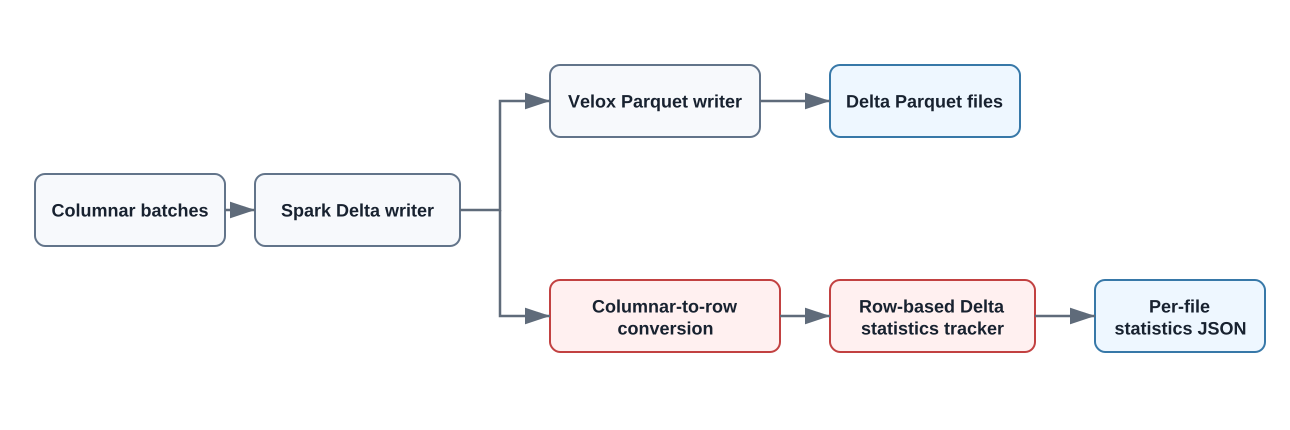
Before: Native batches are converted back to rows for Delta statistics collection.
For large writes or wide tables with statistics collected across many columns, columnar-to-row conversion and per-row statistics evaluation can become a significant part of the total write cost.
The desired design was straightforward: send the columnar batches to Velox and calculate the statistics using native aggregation. The difficulty was preserving Delta's per-file statistics semantics.
A single Spark task can create many output files. Each file must have an independent aggregation result:
file A batches -> statistics for file A
file B batches -> statistics for file B
file C batches -> statistics for file C
Creating a new Velox task for every file would provide isolation, but repeatedly constructing the same plan, operators, memory pools, and execution machinery would introduce unnecessary overhead. Reusing one aggregation task required a way to flush and reset it at every file boundary.
Task Barriers for Velox Hash Aggregation
Velox Task Barrier provides a synchronization point within a running task. It drains all data before the barrier, flushes operator output, resets operator state, and then allows the task to process the next set of input splits.
For an introduction to the general mechanism, see Task Barrier: Efficient Task Reuse and Streaming Checkpoints in Velox.
The Delta statistics writer relies specifically on barrier support in
HashAggregation.
When a barrier reaches the hash aggregation operator, the operator enters its draining state. It stops accepting input for the current cycle and makes the current aggregation result available through its normal output path.
After all aggregation output has been consumed, HashAggregation::finishDrain()
resets the state:
void HashAggregation::finishDrain() {
  if (!isDraining()) {
    return;
  }
  groupingSet_->resetTable(/*freeTable=*/false);
  if (isGlobal_) {
    groupingSet_->resetGlobalAggregation();
  }
  Operator::finishDrain();
}
Two parts of this reset are important.
First, resetTable(/*freeTable=*/false) clears the contents of the aggregation
table without unnecessarily releasing its underlying allocation. The next
cycle can therefore reuse task and operator infrastructure rather than starting
from scratch.
Second, a global aggregation has state that is not represented as ordinary
grouping keys in the hash table. resetGlobalAggregation() reinitializes that
state so values from the previous file cannot affect the next file.
With the aggregation state reset, the task resumes with the next input split.
Native Statistics with Task Barriers
The new tracker converts Delta's existing statistics expressions into a native Velox global aggregation plan, avoiding row conversion while preserving the same statistics semantics.
The Spark Delta writer then fans each columnar batch into two logical paths:
- The Velox Parquet writer writes the batch to the data file.
- The native statistics tracker sends the batch to the reusable Velox aggregation task.
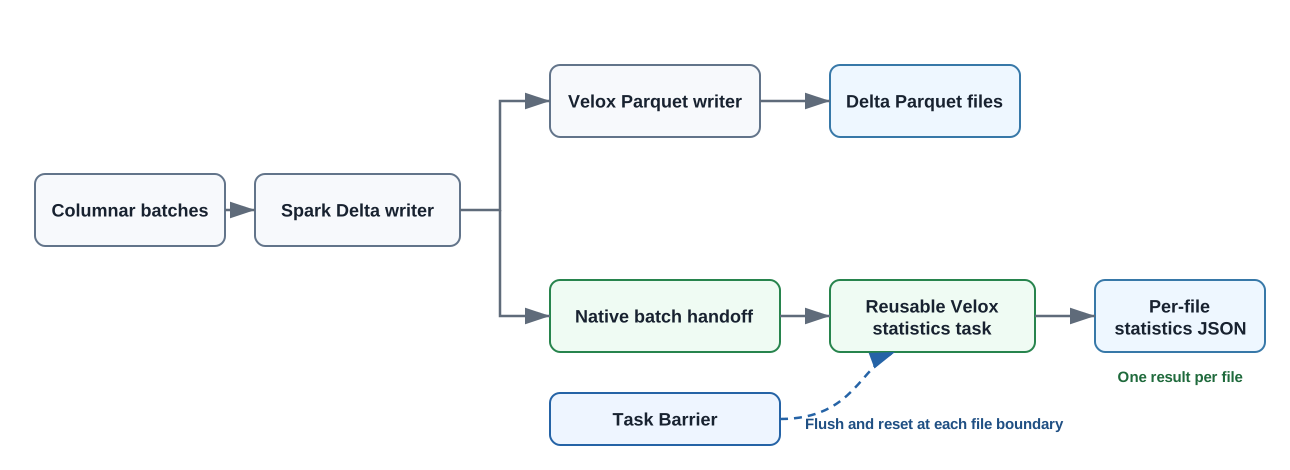
After: Task Barriers flush and reset a reusable native statistics task at each file boundary.
When the writer opens a file, Gluten adds an input iterator split to the Velox task, requests a barrier, and feeds the file's native batches into the aggregation.
At the end of a file, Gluten signals the end of that input iterator. The Velox task drains the global aggregation and emits at most one result row. Gluten converts only this aggregate result to a Spark row and evaluates Delta's final statistics expression to produce the JSON value.
The result is recorded by file name:
part-00000-....parquet -> {"numRecords":...,"minValues":...}
part-00001-....parquet -> {"numRecords":...,"minValues":...}
Once the result has been drained, the barrier resets the hash aggregation state. The same Velox task is then ready for the next file.
Performance
We benchmarked Delta writes using the TPC-DS SF10 tables with 8 CPU cores and 20 GiB of RAM. The typical output file size was approximately 10 MiB.
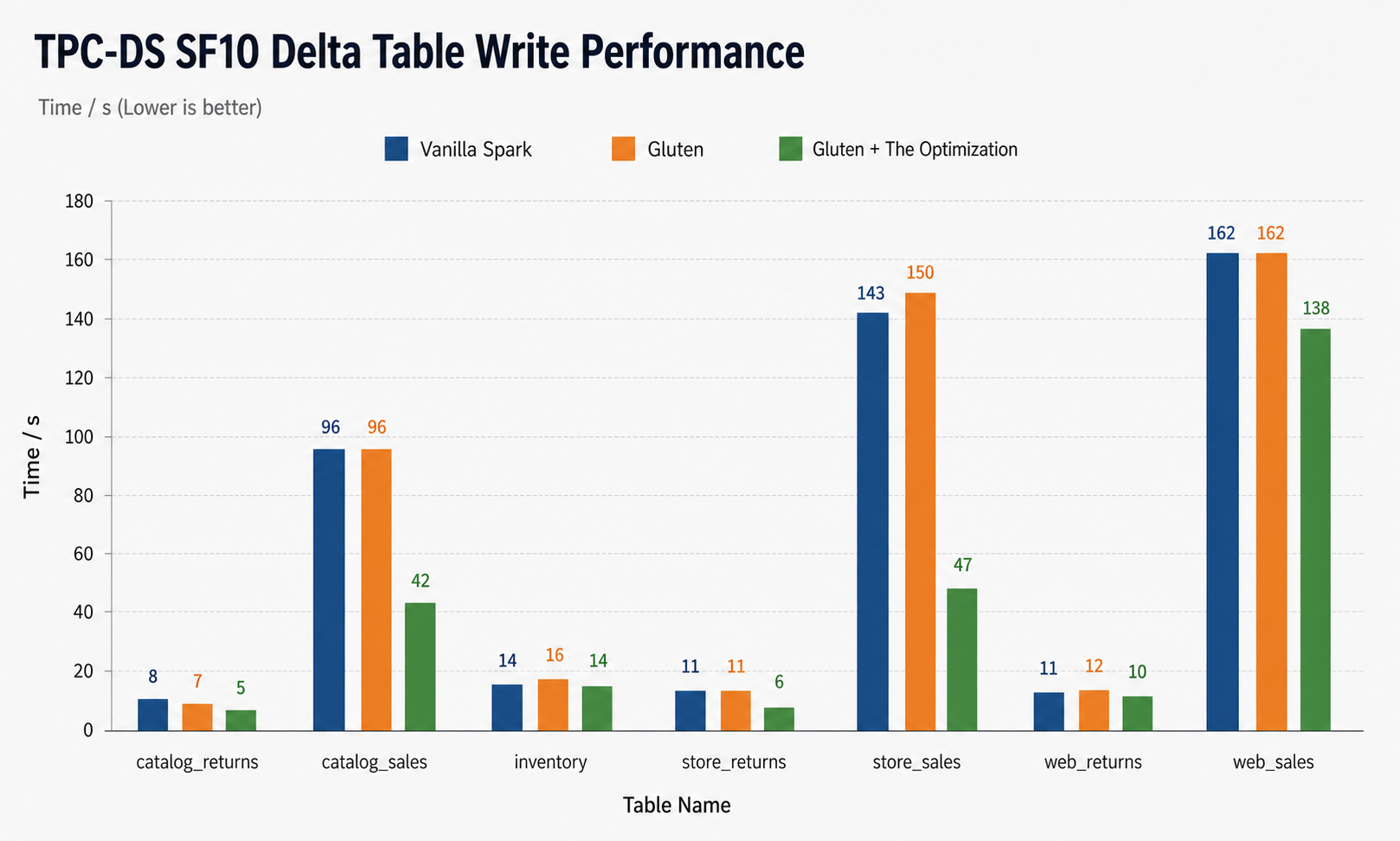
TPC-DS SF10 Delta table write performance. Lower execution time is better.
The total write time was 467.8 seconds with Vanilla Spark, 478.4 seconds with Gluten before the optimization, and 290.0 seconds after the optimization. Relative to Vanilla Spark, Gluten's Delta write speedup improved from -2.22% to 61.31%.